Sunday, 26 July 2015

Clot-busting stroke drug safe, says expert review
The UK medicines watchdog wanted the benefits and risks of alteplase to be analysed after concerns were raised about its safety.
The panel concluded that the best time to use the drug is up to four and a half hours after the start of symptoms.
But some other doctors are still not convinced by the evidence.
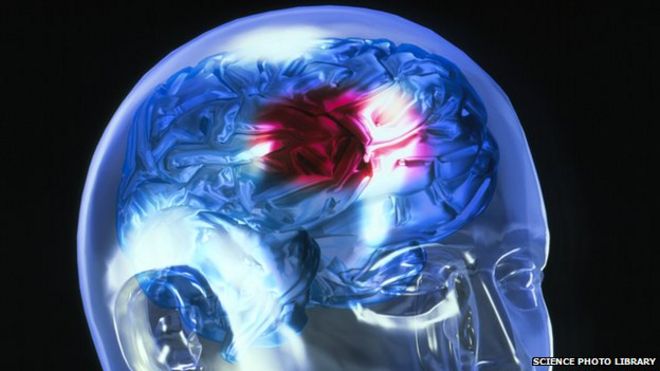
Most strokes are caused by a clot blocking the flow of blood to the brain.
Many patients are given the drug alteplase to break down and disperse the clot - a treatment known as thrombolysis.
I didn't get the feeling there was a real examination of the evidence - most of it came from people working in the field
Sir Richard Thompson, Royal College of Physicians
Benefits outweigh risks
The independent expert panel, chaired by Prof Sir Ian Weller, said it had looked at all available data on alteplase and decided that the earlier the drug was given to patients, the greater the chance of a good outcome.
Used up to four and a half hours after the onset of symptoms, the benefits of the drug were found to outweigh the risks.
But it added that the benefits of using alteplase to treat strokes were "highly time-dependent" and, in a small number of people, there was a risk of haemorrhage.
Prof Weller explained: "The evidence shows that for every 100 patients treated with alteplase, whilst there is an early risk of a fatal bleed in two patients, after three to six months, around 10 more in every 100 are disability-free when treated within three hours."
Five more patients in every 100 are left with no disabilities when treated between three and four-and-a-half hours after a stroke, he said.
However, there are still medical experts who have concerns.
'Worried'
Sir Richard Thompson, past president of the Royal College of Physicians, who sat in on proceedings as an observer, said he felt no progress had been made.
"An investigation like this should look at the evidence from both sides like a court of law. I didn't get the feeling there was a real examination of the evidence. Most of it came from people working in the field."
Dr Roger Shinton, a stroke expert, said there was more to find out.
"I'm sure there will be some further information, which we will all find helpful and that is to be welcomed.
"But I'm worried that most of the key bits of information that will help resolve this debate are still not going to be available."
Dr June Raine, the director of vigilance and risk management of medicines at the MHRA - the UK's medicines watchdog - said a thorough scientific assessment had been carried out, using all the latest evidence.
She added: "We will continue to monitor the safety of alteplase and if any new evidence emerges we will reassess the benefit-risk balance."
Dr Dale Webb, director of research and information at the Stroke Association, said the findings of the review were "extremely welcome news for stroke patients and their families".
"Eligible patients treated with thrombolysis [using alteplase] are more likely to lead more independent lives.
"However, this type of treatment is not suitable for everyone struck down by stroke."
The Stroke Association says it is funding research into other ways to help improve recovery rates from the condition.
Malaria vaccine gets 'green light'

A girl in Tanzania receiving the malaria vaccine during the clinical trial
The world's first malaria vaccine has cleared one of the final hurdles prior to being approved for use in Africa.
The European Medicines Agency gave a positive scientific opinion after assessing its safety and effectiveness.
It represents a 'green light' for the Mosquirix jab, developed by GlaxoSmithKline.
The World Health Organization will consider later this year whether to recommend it for children, among whom trials have yielded mixed results.
Malaria kills around 584,000 people a year worldwide, most of them children under five in sub-Saharan Africa.
'Dream come true'
Mosquirix, otherwise known as the RTS,S vaccine, is the first against a parasitic infection in humans.
Dr Ripley Ballou, head of research at GSK vaccines, said: "This is a hugely significant moment. I've been working on this vaccine for 30 years and this is a dream come true."
The company has not revealed the price of the vaccine, but has pledged not to make a profit from it.
World map of populations at risk from malaria
It has been designed specifically to combat malaria infection in children in Africa and will not be licensed for travellers.
Earlier this year, final results of a clinical trial in seven African countries yielded mixed results.
The best protection was among children aged five to 17 months who received three doses of the vaccine a month apart, plus a booster dose at 20 months.
In this group, cases of severe malaria were cut by a third over four years.
But the effectiveness of the vaccine waned over time, making the booster shot essential.
Without a booster the vaccine did not cut the rate of severe malaria over the trial period.
And disappointingly, the jab did not prove very effective in protecting young babies from severe malaria.
This presents a dilemma for the WHO, which will decide in October whether the vaccine should be deployed, because it is not nearly as effective as scientists would have hoped.
The malaria parasite Plasmodium falciparum is carried by the female anopheles mosquito
Furthermore, it had been hoped the jab could be administered at six, 10 and 14 weeks, along with other childhood vaccines.
But the results suggest the jabs need to be started later, which would involve a huge amount of organisation and extra cost as it is outside the childhood vaccine schedule.
Furthermore, the trial results show it is crucial that children receive all four doses of the jab in order to benefit.
But even a partially effective malaria vaccine could have a role to play in countries with very high rates of disease.
GSK began research on a malaria vaccine 30 years ago and the first trials in Africa began in 1998.
In 2001 a partnership was established between GSK and the PATH Malaria Vaccine Initiative, through a grant from the Bill and Melinda Gates Foundation, with the aim of accelerating development of malaria vaccines.
I see it as a building block towards much more effective malaria vaccines in years to come
Prof Adrian Hill, Jenner Institute, Oxford
In 2009 11 centres began recruiting 16,000 children in seven sub-Saharan African countries: Burkina Faso, Gabon, Ghana, Kenya, Malawi, Mozambique and Tanzania.
Steve Davis, president and CEO of PATH, said: "Today marks a significant scientific milestone for the long-standing partnership to develop a vaccine, yet several more steps remain before a malaria vaccine might reach the young children in Africa who most need protection against this deadly human parasite."
The vaccine works by triggering the immune system to defend against the first stages of infection by the Plasmodium falciparum parasite after it enters the bloodstream following a mosquito bite.
Prof Adrian Hill of the Jenner Institute, Oxford, said he was pleased and encouraged by the EMA's decision but added that the vaccine was not a "magic bullet".
He said: "A bed net is more effective than this vaccine, but nonetheless it is a very significant scientific achievement.
"I see it as a building block towards much more effective malaria vaccines in years to come."
Grandmaster Flash's car mistakenly 'given away' in New York

Grandmaster Flash (L) and Scorpio performing in 2011
A sports car belonging to US hip-hop pioneer Grandmaster Flash has been mistakenly given away by a parking attendant, New York police say.
When the musician returned to pick up the vehicle after nearly two hours, the attendant said he had given it to someone else thinking he was the owner.
The incident happened in a Manhattan garage on the evening of 16 July and is being treated as theft.
The DJ said the missing Dodge Charger had contained valuable vintage records.
Grandmaster Flash, 57, whose real name is Joseph Saddler, tweeted that the attendant "gave the car to somebody that was dressed like me, minus the Pumas".
Grandmaster Flash tweet
Grandmaster Flash and the Furious Five were at the forefront of developing hip-hop with their celebrated album The Message in 1982 and the hit White Lines.
They were inducted into the Rock and Roll Hall of Fame in 2007.
New Horizons: Pluto may have 'nitrogen glaciers'

New Horizons has sped past Pluto and is continuing to image the dwarf planet to study its tenuous atmosphere backlit by the Sun
Pluto would appear to have glaciers of nitrogen ice, the latest pictures from the New Horizons probe suggest.
Scientists believe they see evidence of surface material having flowed around mountains and even ponding in craters.
The activity is certainly recent, they say, and may even be current.
But the mission team cautions that it has received only 4-5% of the data gathered during 14 July's historic flyby of the dwarf planet, and any interpretations must carry caveats.
"Pluto has a very complicated story to tell; Pluto has a very interesting history, and there is a lot of work we need to do to understand this very complicated place," said Alan Stern, the New Horizons principal investigator.
In a briefing at the US space agency's HQ in Washington DC, he and colleagues then outlined a number of new analyses based on the limited data-set in their possession.
True colour
This is now the best true colour image of Pluto, twice as sharp as the one released just before the flyby
These included the observation that Pluto has a much more rarified atmosphere than previously predicted by the models.
This statement comes from measurements made by the probe as it was looking back at Pluto following the flyby.
It could tell from the passage of sunlight and radiowaves through the Plutonian "air" that the pressure was only about 10 microbars at the surface (1 microbar is about a millionth of the air pressure on Earth at sea level).
The other key detection was of hazes in the atmosphere. These are likely the consequence of high-up methane being broken apart and processed by sunlight into simple hydrocarbons like ethylene and acetylene, which then fall, cool and condense to form a mist of ice particles.
Some of this material will probably be further processed into more complex chemistry that rains on to the surface to give certain regions their characteristic reddish hue.
Sputnik Planum
Just a small amount of heat from below could be enough to enable the very cold nitrogen, carbon monoxide and methane ices to flow
But it is the idea of glacial activity having occurred on Pluto that is most likely to capture public attention.
This is interpreted to have happened at the edges of what has become known as Sputnik Planum - the great plain in the western half of Pluto's bright, heart-like feature just north of the equator.
High-resolution imagery from New Horizons' Lorri camera records wavy patterns that look just like the flowing ice of glaciers viewed by satellites at Earth.
And if there was still warmth coming from Pluto's interior then this could allow any surface ices to move and follow a slope, explained co-investigator Bill McKinnon from Washington University in St Louis.
"Water-ice at Pluto temperatures won't move anywhere; it's immobile and brittle," he told reporters. "But on Pluto, the kind of ices we think make up the planum (nitrogen ice, carbon monoxide and methane ices) - these ices are geologically soft and malleable, even at Pluto conditions, and they will flow in the same way that glaciers flow on Earth.
"So, we actually have evidence for recent geological activity."
His definition of "recent" was "no more than a few tens of millions of years". "And what we know about nitrogen ice and what we can estimate about the heat-flow coming from the interior of Pluto - there's no reason why this stuff cannot be going on today."
Mountains
The mission team says the ice appears to flow around the mountains and collect in craters
New Horizons continues to observe Pluto even though it has moved some 12 million km beyond the dwarf planet.
The probe is looking at the world as it makes its slow rotation (one Pluto day lasts 6.4 Earth days).
In about a week's time, this observation will cease and the spacecraft will be spun up.
This will permit systems that ordinarily are used to help maintain three-axis stability to be turned off.
Their power sacrifice can then be diverted to the transmitter to boost its output.
In September, engineers will command New Horizons to start sending back all of the outstanding scientific data it gathered during the flyby.
This stored information will be brought down in a compressed form first of all, followed by an uncompressed return.
The whole process - encompassing all observations of Pluto and its five moons - will not be completed until late 2016.
However, the New Horizons team says it will share the discoveries as they are made during the long downlinking period.
Pluto in false colour
This photo couples enhanced or "stretched" colours with a high-resolution black-and-white image. This amplifies any compositional and textural differences that may be present at the surface
New Horizons
Australian nurse Adam Brookman charged with supporting IS

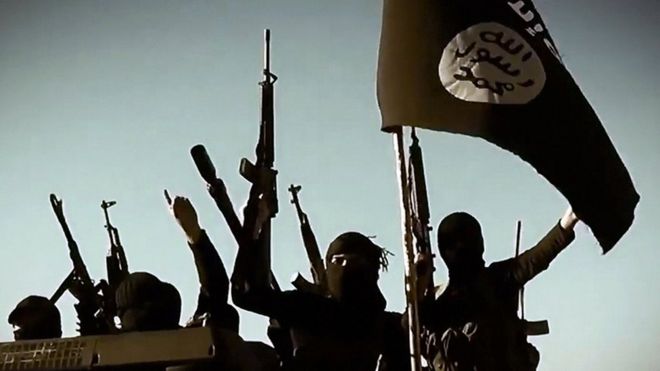
A nurse has been charged with terrorism offences after he voluntarily returned to Australia from Turkey.
Adam Brookman, 39, says he was carrying out humanitarian work in Syria when he was forced to work with Islamic State (IS) militants.
He was detained at Sydney airport on Friday after surrendering to officials in Turkey.
Mr Brookman has been charged under new anti-terror laws with knowingly providing support to IS.
The offence carries a maximum sentence of 25 years in prison.
He also faces a second charge of "performing services with the intention of supporting a person, or persons, to engage in a hostile activity in a foreign state".
The nurse made no application for bail when he appeared briefly at Melbourne Magistrates' Court. He was remanded in custody pending a hearing on Monday.
Police said that although there was no evidence that Mr Brookman posed a threat, they had acted to protect the community.
Return negotiated
Mr Brookman, a Muslim convert, has told Australian media that he travelled to Syria to do humanitarian work but was forced to work with IS when he was injured in an air strike and taken to a militant-controlled hospital.
His return to Australia had been negotiated with Australian government and international agencies, police said.
New Foreign Fighters legislation has made it a crime to assist militant groups in the Middle East.
Australia is on high alert for attacks by radicalised Muslims, including those returning home from fighting in the Middle East.
In December last year, the country specifically banned travel to Syria's Raqqa province, which is held by IS.
It means anyone entering the area could face up to 10 years in prison unless they have a legitimate reason, including family visits, journalism or aid work.
According to the government, at least 100 Australians are fighting with terror groups in the Middle East, and another 150 people in Australia are known to be supporting such groups.
Tokyo plane crash 'leaves three dead'

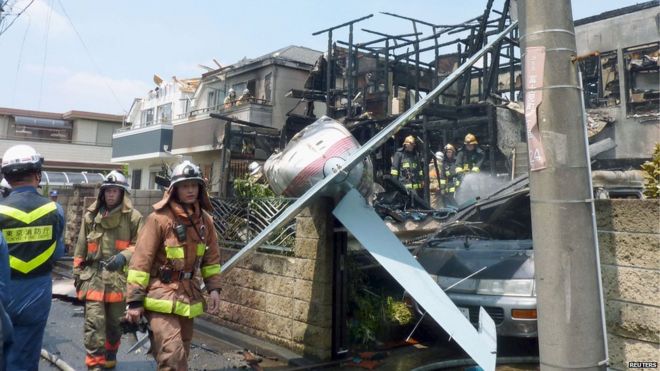
The tail section of the crashed light plane
Houses and cars were set on fire when the plane crashed, the fire brigade said
Three people were killed as a light plane crashed in Japan, setting fire to several houses, local media say.
The five-seater plane crashed at about 02:00 GMT shortly after it had departed from Chofu airport in Tokyo, public broadcaster NHK reported.
At least three houses and two cars were set on fire, it said.
Two people on board and a female resident were killed, NHK quoted police as saying.
Tokyo fire brigade said at least two other people were injured.
Turkey car bomb kills two soldiers as PKK truce breaks down
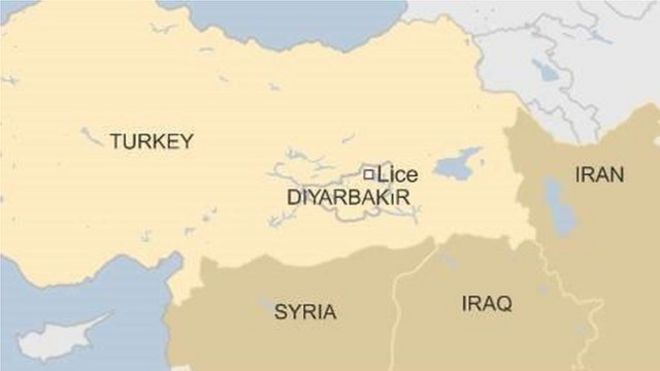
A car bomb attack on a military convoy in south-eastern Turkey has killed two soldiers and injured four others, Turkish officials say.
The explosion happened in the town of Lice in Diyarbakir, the province governor's office said.
It comes a day after Turkey bombed Kurdish separatist camps in northern Iraq - the first such strikes since a peace process began in 2012.
No group has claimed responsibility for the latest attack.
The Kurdish Workers Party, or PKK, threatened to break off a two-year ceasefire following Saturday's raids.
There has been a wave of unrest after a suicide bomb in Suruc, blamed on so-called Islamic State (IS) killed 32 people - mainly university students planning to carry out aid work in Kobane, Syria.
The PKK's military wing killed two Turkish police officers on Wednesday, claiming they had collaborated with IS in the bombing in Suruc.
The US has called on both sides to avoid violence, but stressed that Turkey has the right to defend itself against attacks by Kurdish rebels.
The BBC's Turkey correspondent Mark Lowen reports Kurds say the Turkish government has failed to stop IS, seeing the group as a useful tool against its Kurdish enemy, the PKK.
He says sporadic attacks including one on a police station in Istanbul have raised the spectre of a return to conflict between the Turkish state and Kurdish separatists that blighted the country for 30 years and killed 40,000 people.