China Eyes New Cruise Link to Disputed South China Sea Islands
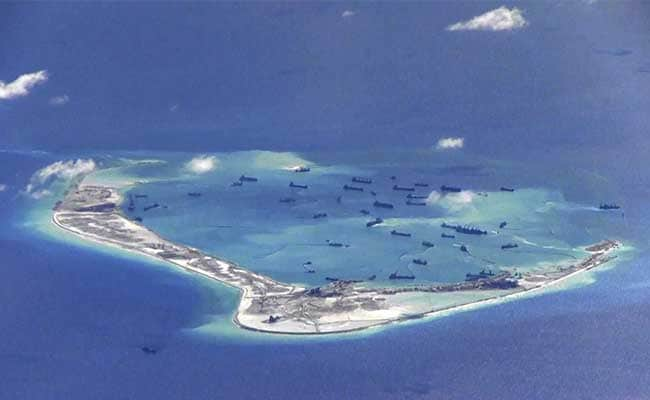
BEIJING: Chinese authorities plan to start a second cruise ship link to the disputed Paracel Islands in the South China Sea, state media reported on Monday, in a move that may irk Vietnam, which also claims the islets.
China began cruises on the Coconut Princess on a trial basis from the southern island province of Hainan in 2013. More than 10,000 tourists have taken the trip so far, the official China Daily reported.
Officials hope a second ship will be in operation before the end of the year, and that more islands can be opened up for visits, the report said.
Those include Woody Island, where the Chinese government seat for administering the Paracels is located.
However, weather and poor facilities could hamper tourism efforts. The Paracels are often hit by typhoons and strong winds, the paper said.
"We need to take into account the capacity of the islets to handle tourists. Cruise ships cannot dock on some of them and the tourists have to be bought ashore by smaller ships," Xie Zanliang, head of a government tourism company promoting trips to the Paracels, told the newspaper.
The deployment of a Chinese oil rig near the Paracels last year sparked a standoff with Vietnam and anti-Chinese riots.
Taiwan also claims the Paracels.
China claims 90 percent of the potentially energy-rich South China Sea. Brunei, Malaysia, the Philippines, Vietnam and Taiwan lay claim to parts of the sea, through which passes about $5 trillion of trade a year.
Vietnam said last month it would offer its own cruises to the disputed Spratly archipelago, which lies south of the Paracels, a move that sparked anger from China.
USD 1 Million Prize for Crafting Best Message for Aliens
LONDON: Yuri Milner, the Russian billionaire who is funding the USD 100 million search for aliens, is offering USD 1 million prize money to craft the best message to send to an extraterrestrial civilisation.
Frank Drake, an astronomer who has been at the centre of searches for extraterrestrial intelligence since the 1960s, said that the first thing the judges would do was eliminate any entries written in human languages.
"Some people have foolishly composed messages in English. Big mistake," Mr Drake said.
Mr Drake has been involved in previous efforts to devise interplanetary messages, including the plaque on the Pioneer and Voyager space probes, which are now the farthest human objects from Earth, 'The Times' reported.
Given that the message may take thousands of years to reach intelligent life, it should include as much information as possible for the creatures receiving it.
"Don't just send a message like, 'We want to be your friends'. The ETs will just get disappointed and mad at this," Mr Drake said.
Mr Drake said the key was to think about what we have in common with other beings.
"There are many common reference points. Chemistry, for instance. Through the spectral lines of elements, which are the characteristic fingerprints they leave on the light spectrum, we can give scale - hydrogen's spectral line could be a common unit of length," Mr Drake said.
Pulsars would also be a common reference point. The lighthouses of the universe, these neutron stars emit characteristic bursts of radiation. They can be used to describe a time interval, he said.
The USD 100-million Breakthrough Initiatives programme was launched by eminent British physicist Stephen Hawking at the Royal Society in London last week.
Funded by Ms Milner, the programme has been characterised as the "biggest scientific search ever undertaken for signs of intelligent life beyond Earth."
Gurdaspur Terror Attack: Senior Police Officer Among 6 Killed
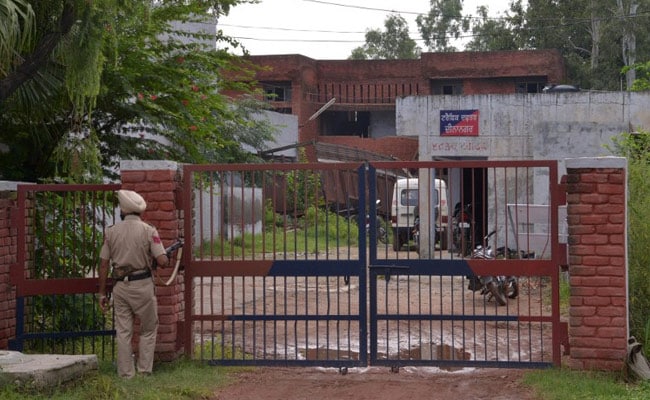
DINANAGAR (GURDASPUR): A senior police officer, Baljit Singh, was shot dead this morning while fighting terrorists in the Gurdaspur region on Punjab near the border with Pakistan. Six people have been killed in the attack.
Mr Singh was injured in the cross fire between security forces and the terrorists, who remain holed up in a police station in the town of Dinanagar.
Mr Singh, who headed the detective branch of the police in Gurdaspur, died after being moved to hospital, said sources.
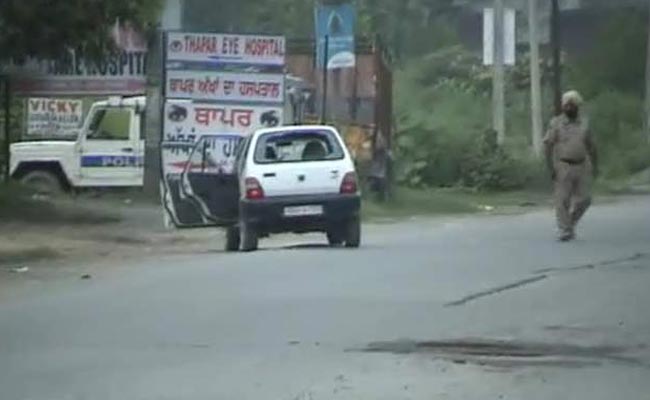
The four terrorists, reportedly wearing army uniforms, opened fire on a bus and carjacked a Maruti 800 before storming the police station.
Five live bombs were recovered from nearby railway tracks and Home Minister Rajnath Singh said he had ordered increased security on the border with Pakistan, although it remains unclear who is responsible for the attack.
Punjab Put on Maximum Alert After Gurdaspur Terror Attack
CHANDIGARH: Security forces in Punjab went on "maximum alert" in the wake of suspected terror attack in Gurdaspur district today, about three weeks ahead of the Independence Day.
A senior police official said that in view of the attack, "maximum alert" has been sounded across the state and security has been beefed up along its borders with neighbouring Jammu and Kashmir.
Additional police and other security personnel have been deployed around vital installations and key public places in the state, the official said.
He said the police has set up 'nakas' or check-points and intensified checking of vehicles.
Border Security Force, which guards the Indo-Pak border, has also been put on high alert after the incident, he said.
Meanwhile, alert has also been sounded in neighbouring Haryana and Chandigarh, the common capital of both the states.
At least five people have been killed by a group of terrorists in Gurdaspur in Punjab near the border with Pakistan. The terrorists are currently in an empty police station and are exchanging fire with security forces. This is how the attackers struck, according to latest information from sources:
Around 5.30 am, the four armed terrorists, wearing army uniforms, tried to grab a tempo on a major highway near the bus stand in Dinanagar.
The tempo driver managed to escape, said sources.
A roadside food stall owner was reportedly killed in the firing.
The terrorists then opened fire on a bus heading towards the state capital of Chandigarh; six passengers were injured.
The terrorists shot next at a white Maruti 800; the driver was injured; the attackers left in his car
They stopped at the police station in Dinanagar and opened fire. Two cops were killed.
In the exchange of fire with security forces, three patients at a hospital next door were shot, according to sources.
The terrorists are now holed up in a part of the police station and are continuing to exchange fire with security forces.
'They Fired Every 5 Minutes': Policeman Injured in Punjab Terror Attack
DINANAGAR: One of the policemen injured in the terror attack on a police station in Punjab's Gurdaspur early this morning said gunfire erupted at around 5.45 am. Five including two policemen have been killed in the attack.
"We didn't realise when they came and started shooting...they were wearing army uniforms," the policeman, covered in blood, said as he was being rushed to safety. (Pics)
"A bullet whizzed past my ear. When I turned around, I saw that I had been shot in the shoulder," he said.
The policeman said it felt like there were more than four attackers. "They kept firing every five minutes. It was as if the ground was shaking," he said.
The terrorists are believed to crossed over the border at Hiranagar in Jammu before heading to Gurdaspur.
Before they attacked the Dinanagar police station, the terrorists opened fire at a bus in the town, killing a passenger.
Five live bombs have also been found on railway tracks between Dinanagar and Pathankot.
Dinanagar borders Pathankot, which has many key army establishments.
Sunday, 26 July 2015
Tony Fadell: What will Google's $3.2bn guru do next?
Media captionTony Fadell talks to the BBC's Leo Kelion about Google Glass, driverless cars and other ambitions
Is Tony Fadell destined to eclipse his former Apple workmate Sir Jonathan Ive?
When Google paid $3.2bn (£2.1bn) to buy Tony Fadell's start-up Nest in 2014, it got much more than just an internet-connected thermostat and smoke detector.
It got the man dubbed the "the iPod's father" - the engineer/designer who sold Steve Jobs on his vision of a portable music player, and then worked alongside Jony Ive to build it, update it and then repeat the process with the iPhone.
Now, the two men are set to go head-to-head. First with wearable tech, and then later, perhaps, with competing car designs - more of which later.
Nest's smoke/carbon monoxide detector and thermostat can talk to each other and a smartphone app
Tellingly, Mr Fadell reveals he recently started testing Sir Jonathan's latest product, the Apple Watch, although he was not wearing it at the time of interview.
"I've had mine for about two weeks now," he says.
"I think they did a tremendous job on the hardware components of it.
"They are trying many different things with that platform - some are going to be great, and some are not."
When Mr Fadell agreed to sell Nest to Google, the reason he gave was that joining forces would accelerate his "thoughtful home" master plan - he hates the term "internet of things", which he says does a "disservice" to his products.
But in January, it became clear that Google's chief executive, Larry Page, had wider uses for his hardware expertise, and the troubled Glass computer was added to his duties.
Mr Fadell has taken over control of the Glass project from the Google X skunk works team
"It wasn't handed to me and said, 'Tony clean it up,'" Mr Fadell clarifies, "I offered."
"I remember what it was like when we did the iPod and the iPhone. I think this can be that important, but it's going to take time to get it right."
'Spoil market'
The $1,500 (£965) "explorer edition" of Glass was soon pulled from sale, and Mr Fadell made clear that future test versions would be kept in-house.
That was widely seen as a shift in strategy for Google - a company that took five years to take its Gmail service out of "beta" status, and that still invites users to "play" with preview versions of other products.
Moreover, it caused anger among developers who had sunk time and money into making apps for a product that no longer existed.
But Mr Fadell defends the shift, saying a distinction needed to be drawn between hardware and software.
"If you are only doing services based on electrons, you can iterate quickly, test it, and modify it and get it right," he says.
Google has acknowledged the first version of Glass did not "have the impact" it had hoped for
"But when you are dealing with actual atoms - hardware - and you have to get manufacturing lines and it takes a year or more to develop that product, you better understand what it is and what it's trying to do and specifically what it's not going to do.
"Customers have to spend money to buy those atoms.
"They want something that delivers value or you end up with a real disappointment and you can spoil the market."
Home cam
For now, that leaves Mr Fadell's reputation dependent on his Nest line-up.
Mr Fadell unveiled a slimmer version of his smoke detector, a redesigned and rebranded home camera and new software for his thermostat, in June
It is limited to three products, including the recently launched Nest Cam.
The motion-detecting camera streams live footage and sound from the owner's home to an app and can save memorable moments in the cloud.
If you get over the creepiness factor of effectively spying on your family, it's fair to say the device shares the crisp, stylish look of the Nest's other products, and reviews have been positive.
But the camera is actually an upgrade to an earlier device made by Dropcam - a company Nest acquired.
That means Mr Fadell's division has not created a new product category of its own since joining Google.
Nest Cam can send live video and audio to an app and play back sound sent from the smartphone
Bearing in mind, Mr Page told him to "keep doing what you're doing, and do it as fast as you possibly can", it raises the question: what's taking so long?
"Talk to me about the number of home product companies who have come out with three different product categories in less than five years... are shipping and they are the number ones in their category," says Mr Fadell, slightly bristling.
"I would love to have more, faster.
"But it takes time - it really takes time to make these products to the level of design and near-perfection that we achieve."
Connected fridges
He adds that Nest's biggest goal right now is to expand the range of third-party products its devices talk to - for example its Thermostats can switch LG fridges into energy-saving mode when no-one's in, and its Protect sensors can make Philip's Hue lights flash red if they detect smoke or carbon monoxide.
Larry Page - pictured here with Tony Fadell and Nest's other co-founder, Matt Rogers - spent $3.2bn on Nest, making it Google's second most expensive takeover after Motorola Mobility
But such advances have less impact than a new product.
"Despite his substantial success to date and involvement in key products such as Apple iPod, Mr Fadell has arguably not yet reached the truly iconic status bestowed upon Jonathan Ive," Ben Wood, from the tech consultancy CCS Insight, says.
"Given the huge amount Google invested in the acquisition of Nest to secure his services there must be an expectation that he too can deliver his own portfolio of truly disruptive devices with mass appeal.
"Google still lacks a smash-hit consumer electronics device of its own - it would be sensible to assume it hopes Mr Fadell can deliver that missing element."
Fadell and Ive
Jony Ive and Tony Fadell worked together at Apple on 18 generations of the iPod and the first three generations of the iPhone
The two men worked together on first iPods and iPhones, but are credited with different achievements.
With the iPod, Mr Fadell first convinced Steve Jobs of the wisdom of developing a portable music player and then worked out how to incorporate a hard drive - a fragile component - into a device that could be thrown about, sat on and generally abused.
Jony Ive's breakthrough was his design of its thumb-wheel, which scrolled through songs more rapidly as it was spun more quickly.
With the iPhone, perhaps Mr Fadell's greatest feat was finding a way to shrink the tech necessary to offer a multi-touch user interface on a handheld device.
Jony Ive's skill was best summed up by one writer as making the final product look almost more like "a piece of jewellery than a gadget".
In post-Jobs Apple, Sir Jonathan's influence has grown further - extending to the look of the company's operating system software, the creation of its Watch and even the design of its new headquarters.
By contrast, Mr Fadell has thrived beyond - building and selling a multi-billion dollar company, reinventing mundane household devices as desirable gadgets, and becoming one of Google's key figures.
Driverless cars
This leads to thoughts about whether Mr Fadell could become involved in other Google projects.
A question about working on its growing roster of robots is rebuffed on the grounds that they are still a long way from leaving the lab.
But self-driving cars, he adds, are much closer to launch and a "big curiosity".
"I don't think you've seen anything of what the design of the car could look like when it first materialises," he says.
Google is expected to change the design of its self-driving cars before they exit test status
"How do you make those occupants feel like they are safe and make sure they are safe?
"How does the car exude safety [and be] fashionable as well?
"How does this 'utility' self-driving car also be a reflection of you, right, as well as itself and also be transparent about its safety?
"Those are very interesting questions that still need to be dealt with."
He adds that he has "some thoughts" about the answers and is sharing them with others involved in Google's self-driving car project.
"We are having discussion about them all the time," he says.
Mr Fadell says driverless cars will need to both be fashionable and convey safety at the same time
"I always have ideas - it's whether or not people want to hear them."
So, nothing official yet.
But it would not be a surprise if Google eventually announces Mr Fadell is adding automobile design to his list of duties.